
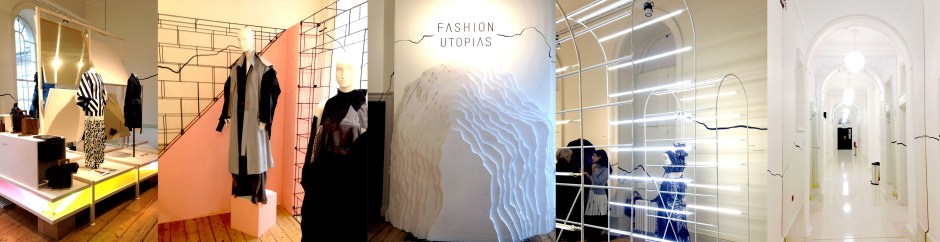
A look into a Utopian future through imaginative fashion and interactive event technology at the West Wing Galleries.
I am not a fashionista nor have I not attended many fashion shows. So please take note that this entry about Fashion Utopia Showcase is entirely about the exhibition rather than the fashion itself (although the pieces were amazing.)
As a spectator, the exploration of this collective Utopia transpired immediately at the entry of the West Wing Gallery and continued as a journey visiting each of the competing countries. The entry foyer transformation was a great initial taster of the show, its décor quite radical with bespoke larger than life organic installations lining the entry foyer walls. This layered installations appropriating topical mapping were recreated in two materials in poly foam and plywood, creating levelled stages for the mannequins adorned with Utopian collection pieces.

For those whom have not been to the West Wing Gallery, it’s a multi-sectioned space consisting of a long corridor with many pockets of rooms leading off one side. For this event the hall was treated with the mirror clad archways as well as a black sketch line graphic traced along the walls. This graphic served as a dynamic feature for the white walls while also serving as a pathway leading spectators from the corridor space to each of the “countries”. What made the journey exciting was the varied discovery of designs found in of each room. All these displays were eye catching but marginal enough not to remove focus from the displayed couture.
As there were so many rooms with over thirteen countries on display, my pictures are better to look at than my descriptions. So I am only going to mention the displays that either had a nifty design of use of engaging technology.
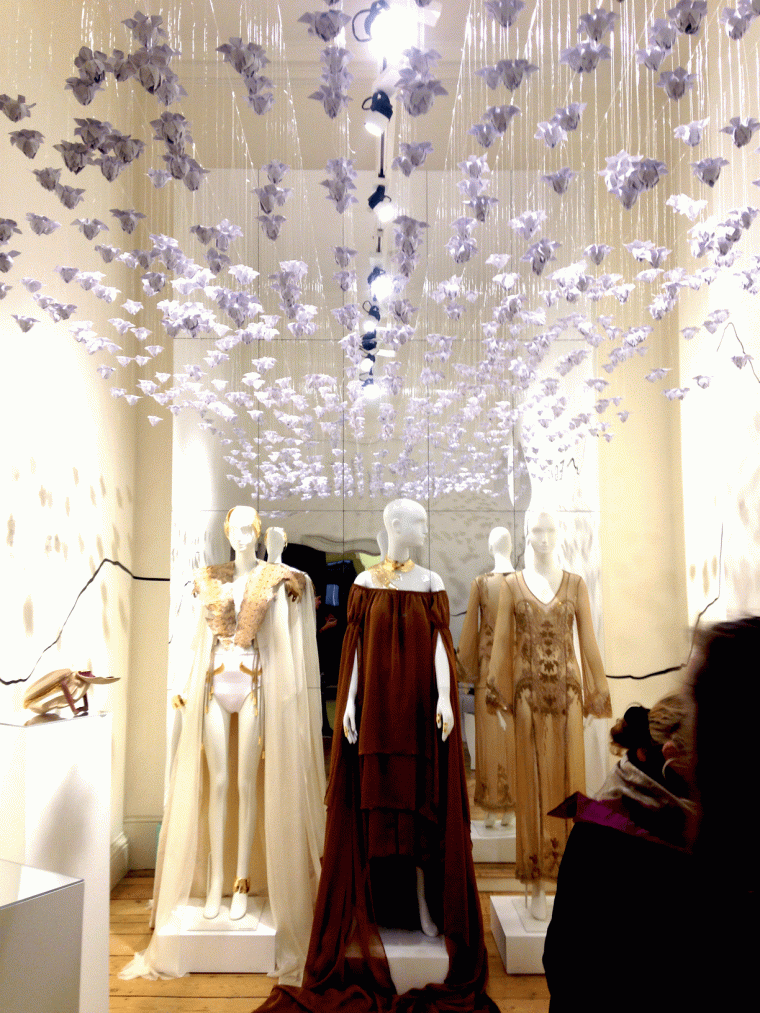
Egypt’s gallery, although one of the smallest spaces had the intimacy and chic sophistication of a fashion boutique. It’s ceiling consisted of a beautiful canopy of suspended origami lotus flowers aligned leading your view to a mirrored wall. The mirrors allowed us a view of the back of the finely detailed fashion pieces. It was an inviting and clever way of transforming the 3mx 3m room with a high ceiling.
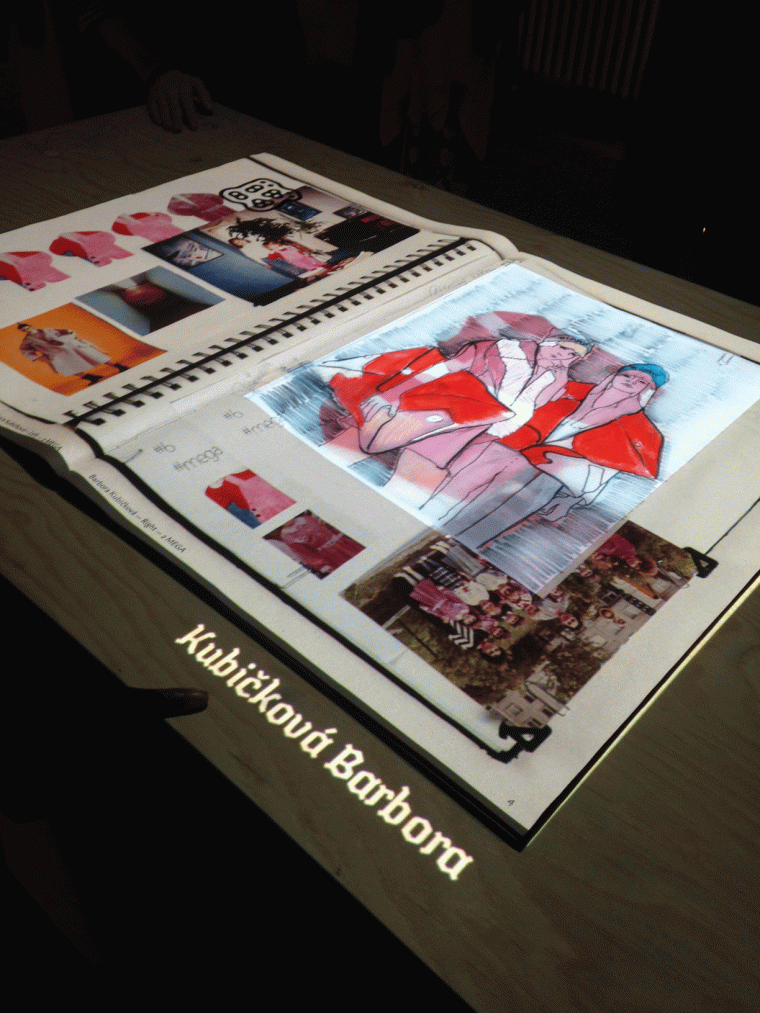 Interactive post digital book by Ján Šicko/ Dev Kid Studio
Slovakia also had a small sized gallery. Their design team used this to their advantage, creating a darkened room and spot light displays on the mannequins. However the main focus of the space was a plywood plinth in the rooms centre housing what has been described as a “interactive post digital book” display. This display consists of an oversized portfolio book made of plain brown paper pages and some minimal block shapes. Through the use of an overhead projector and pathway mapping software the book enabled the spectator to engage with this collection through vivid images and video.
To further communicate their inspirations each designer from Slovakia had created a vivid storybook or mini movie with interviews, scrapbook collections or stylistic trailers of their collection. Each of the pages contained a stamp unique to one of the four designers of the show. As the pages were turned a software reader would recognise the stamp and alter between the show reels projected into the book. This display drew in quite a few people to stop, admire and play with the images. It was an immediate way of understanding each fashion designers vision and made me admire the uniqueness of their Utopian adaptation.
 Portugal’s’ striking display was designed by Miguel Bento , he has also been the set designer for Portugal’s participation in IFP since 2013.
My next gallery stop was Portugal. Upon entry, a colossal geometric extrusion snaked its way through the space creating archways, walkway barriers and exhibition seating. This structure sectioned up the gallery, encouraging us to navigate past or climb through it’s spaces to look at the displayed couture. There was an element of live animation as within the archways, suspension cables with turning mechanisms rotated the mannequins for a 360 degree view of the apparels.
In striking contrast to the earthy tones of Portugal, Lebanon’s exhibition was sharp and electric with the use of slim fluorescent light tubes highlighting the curved archways. Its illuminated archways, creating an enclosure of two gallery spaces with a central arched pathway between both. I loved the lighting and arched framework which gave the display an industrial aesthetic and the cool toned lighting really illuminated the blue in fashion pieces. The wall blurb described “Playing with the Utopian co-existence of light and the material world, the exhibition is a re-imagining of familiar space.”

Lebanon’s aesthetic of “Blueprint Beirut” was strongly bared through the shades of indigo blue against white patterned lined prints. The overall look was had a ultra cool and high tech architectural look which surprisingly had a slightly challenging feel for the spectator to entry the space. With all the lights it feels like you the spectator are also now under the spotlight and part of the shows display with the central archway (most likely not intended) was reminiscent to that of a metal detector! One of Lebanon’s designers picked up on this jokingly mentioned “ Don’t worry, it’s not going to beep” to beckon some shy spectators from crossing through the archway.

Another high tech portfolio display was Nigerian space titled “Across the Bleed” utilizing the cardboard google VR headsets Briz Tech VR to allow the visitor to view short movie reels about the collection through virtual reality. My viewing contained an interview and discussion of some of the concepts and imagery selected by the five Nigerian fashion designers. These headsets were also part of the display of the models “here, visitors bear witness to the evolution of fashion: a utopian fashion that transcends the imagination, dynamically merges heritage and innovation, and takes its place in the veritable paradise of Africa and beyond.”
All in all the showcase it was an great journey to travel and experience the Utopian cultures of thirteen countries all within one event space! I especially enjoyed and meeting with the artists and seeing all the beautiful fashion pieces. Overall I found the forms and style used in the couture and design to be fresh and unprecedented, a real inspirational gem! If you saw the show I am sure you will be in agreement with me that it was well worth rushing to see in the short four days duration.
All quotes on the exhibitions are from the IFS 2016 website. For more information of each of the designers and the exhibition, click below:
https://www.somersethouse.org.uk/fashion/fashion-utopias
 Inspirations of an Event Designer......